
The Milkman of Capo
Yesterday, my friends and I had dinner at Isgrò on the Capo market, and while wandering through the little courtyards nearby, I came across the name of a man I knew — and had somehow forgotten. Even though these are exactly the stories that make a city feel alive to me: stories about its real, everyday heroes.
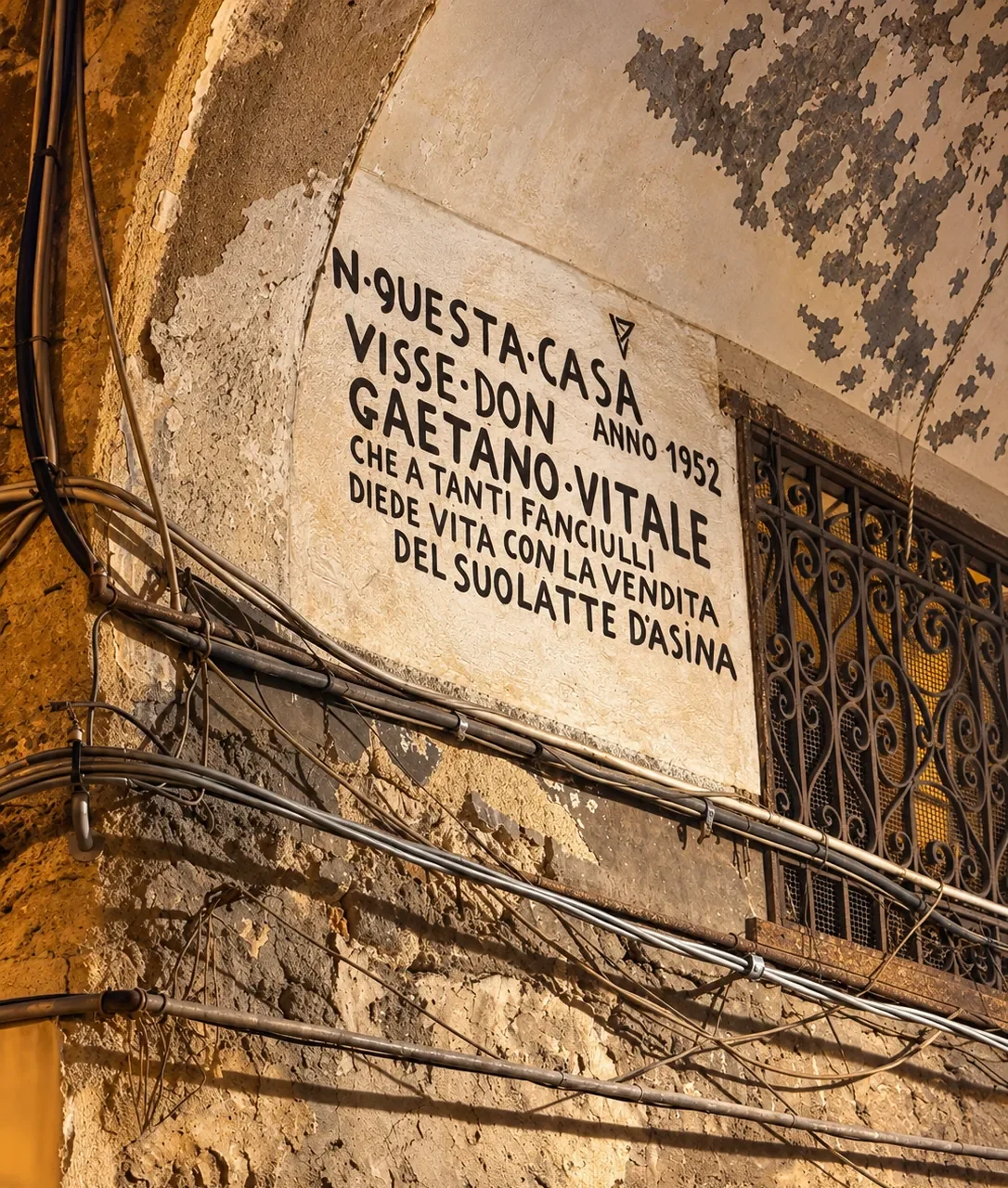
Inside the archway of a house, painted directly on the wall, I found this inscription: “In this house lived Don Gaetano Vitale, who saved the lives of many children by selling them the milk of his donkeys.”
Don Vitale was the milkman of the Capo neighbourhood. During World War II, cow’s milk was scarce and expensive. But Don Vitale also had a small farm with donkeys, and they produced milk too. Donkey milk was especially valuable for weak and sick children because its composition is closer to human milk than cow’s milk.
Every day, Don Vitale brought milk to the market and sold it at normal prices — but only to those who could afford to pay. Capo still remembers a saying about him: “Those who have money buy it. Those who don’t still drink it.” He helped everyone, whether they could pay or not.
And this is where the story turns into a Capo legend. I couldn’t find any official confirmation of it, but the fact that the story is still told says a lot about how important he was to the neighbourhood.
They say that one of the children who survived the war thanks to Don Vitale’s donkey milk later emigrated to America. Years later, he returned to Palermo to find Don Vitale and thank him. By then, the milkman had already died, so the man painted this inscription on the wall of his house in his memory.
And the Capo neighbourhood has kept it there ever since.