
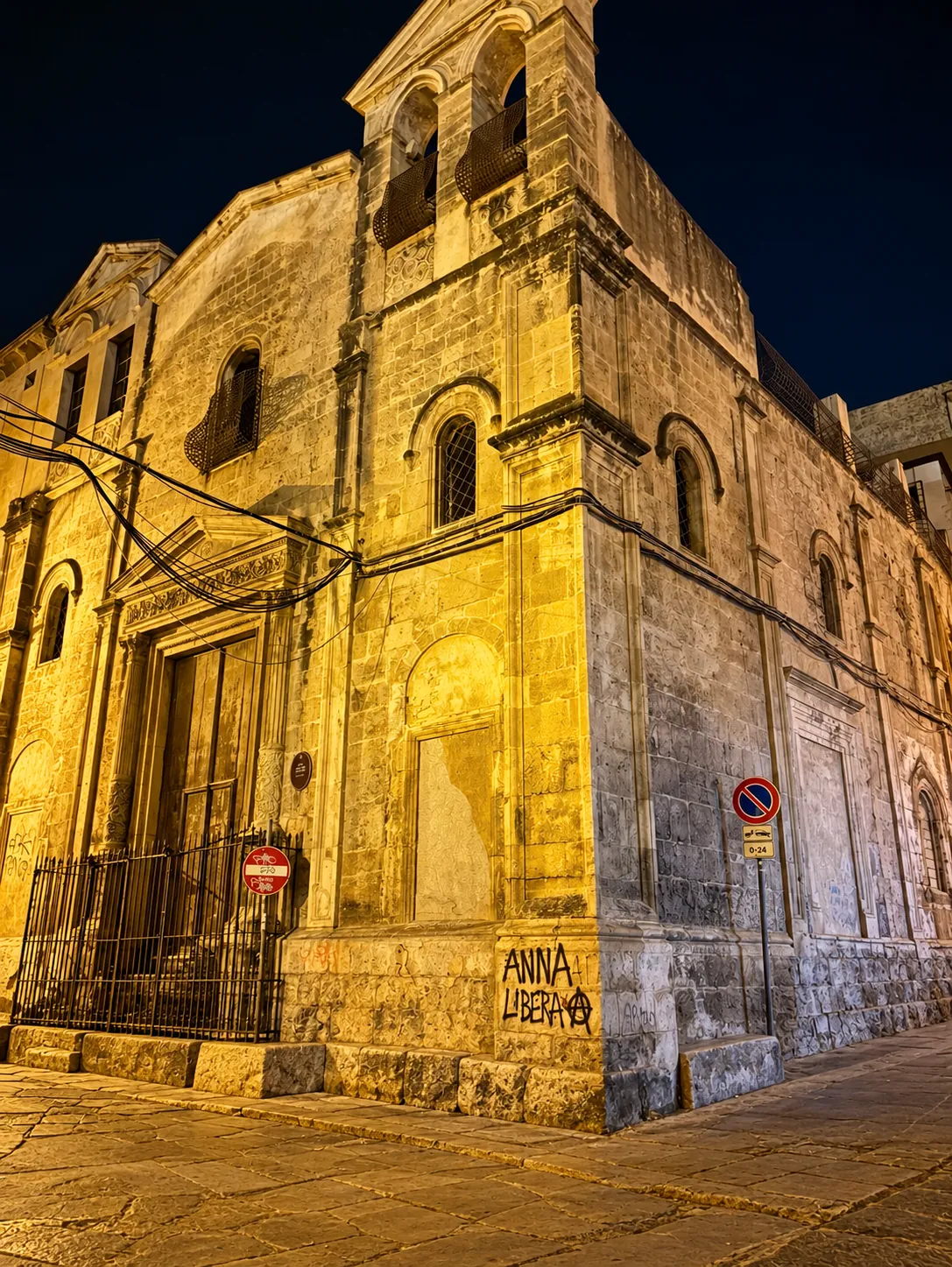
Chiesa di Sant’Agata alla Guilla
In the Capo district, not far from the Cathedral, I came across an abandoned church. Its history on this site goes back to the 12th century, but I want to tell you about a few later events that caught my attention.
One of the best-known legends connected with this church is the story of the Gambler’s Stone, La Pietra del Giocatore. In the 15th century, there was a tavern near the church where locals gathered to play bocce, a ball game similar to pétanque. One of the regular players was a porter called Mommo, known for gambling and for having a nasty temper.
That day, Mommo was having no luck. He kept losing and getting angrier. After losing everything, he grabbed a knife and ran into Chiesa di Sant’Agata alla Guilla. In front of everyone, he stabbed an icon of the Madonna, wounding both her and the infant Jesus.
At that moment, a miracle happened. The Madonna’s face turned pale, and blood began to flow from the wounds. Mommo was terrified and tried to run away, but then realised that he had become completely rigid and could not move.
The people inside the church dragged him outside. Blasphemy like this could be punished by death at the time, and they decided to hang him immediately, without waiting for a trial. But they could not find a single suitable tree nearby.
Then a second miracle happened. A stone suddenly pushed out from the wall of the building opposite the chapel, just far enough to make it possible to hang the sinner Mommo from it.
The day after the execution, the owner of the house tried to cut the stone away, but it “grew” back in the same place. People said it was there as a warning to others. For centuries, many historians confirmed that the stone really existed, right up until 1943, when the building was destroyed during the bombing.
The second story is not a legend at all. At the end of the 17th century, two priests founded the Ritiro delle Maddalene Pentite beside the church — a refuge for “repentant Magdalens”. Prostitutes who wanted to change their lives were accepted there. In other words: from prostitutes to nuns.
At first, it was just a few houses next to the church, but the institution expanded quickly thanks to donations from noblewomen and even from the wife of the Viceroy of Sicily. Around 50 years later, however, the convent that had been founded for “fallen women” changed its rules and began accepting only virgins. Even Rome was outraged, but unfortunately that did not change the convent’s decision.
The last story is the shortest, and this one comes from the 21st century. A little over ten years ago, a fully equipped marijuana plantation was discovered inside the abandoned convent building. The owners, of course, were never found.