
San Domenico
“Domini canes”, or “the hounds of the Lord”. A play on words associated with the Dominican Order. You can often see a dog with a torch — a symbol of preaching that lights up the world. You can see this symbol in different parts of the city, but of course their home in Palermo is the Chiesa di San Domenico. It is especially famous for having been the Pantheon of Illustrious Sicilians since the 19th century.
Just imagine: during Bourbon rule, someone came up with the idea of creating a place dedicated to great Sicilians. This could have been seen as a political conspiracy, which could carry the death penalty.
For me, it is a very quiet and pleasant place. It combines simplicity, calm, and the elegance of Sicilian Baroque. As a pantheon, San Domenico holds both the remains of great people and memorial monuments.
Just a few years ago, the remains of Giuseppe Tomasi di Lampedusa, author of the famous novel Il Gattopardo, were moved here from the Cimitero dei Cappuccini. The film adaptation with Alain Delon, Claudia Cardinale, and Burt Lancaster brought the story worldwide fame. One line has stayed with me forever: “If we want everything to stay as it is, everything has to change.”
Another famous name impossible to miss in the Pantheon is Giovanni Falcone — the judge known throughout Italy, murdered by the Mafia and, for me, a symbol of the fight for freedom. His remains were moved here later, and this became the cause of a conflict between the Falcone family and the family of his wife, because the couple were separated after death. There is also a memorial plaque dedicated to his friend and colleague, Judge Paolo Borsellino. You can often see portraits of these two men around the city.
Besides the church itself, to the left of the entrance there is a chiostro — a small monastic courtyard. Very quiet and cosy. It is the only part of the Dominican complex that has survived from the 13th century. This summer, a small room there was opened. It had been discovered during restoration work around 30 years ago.
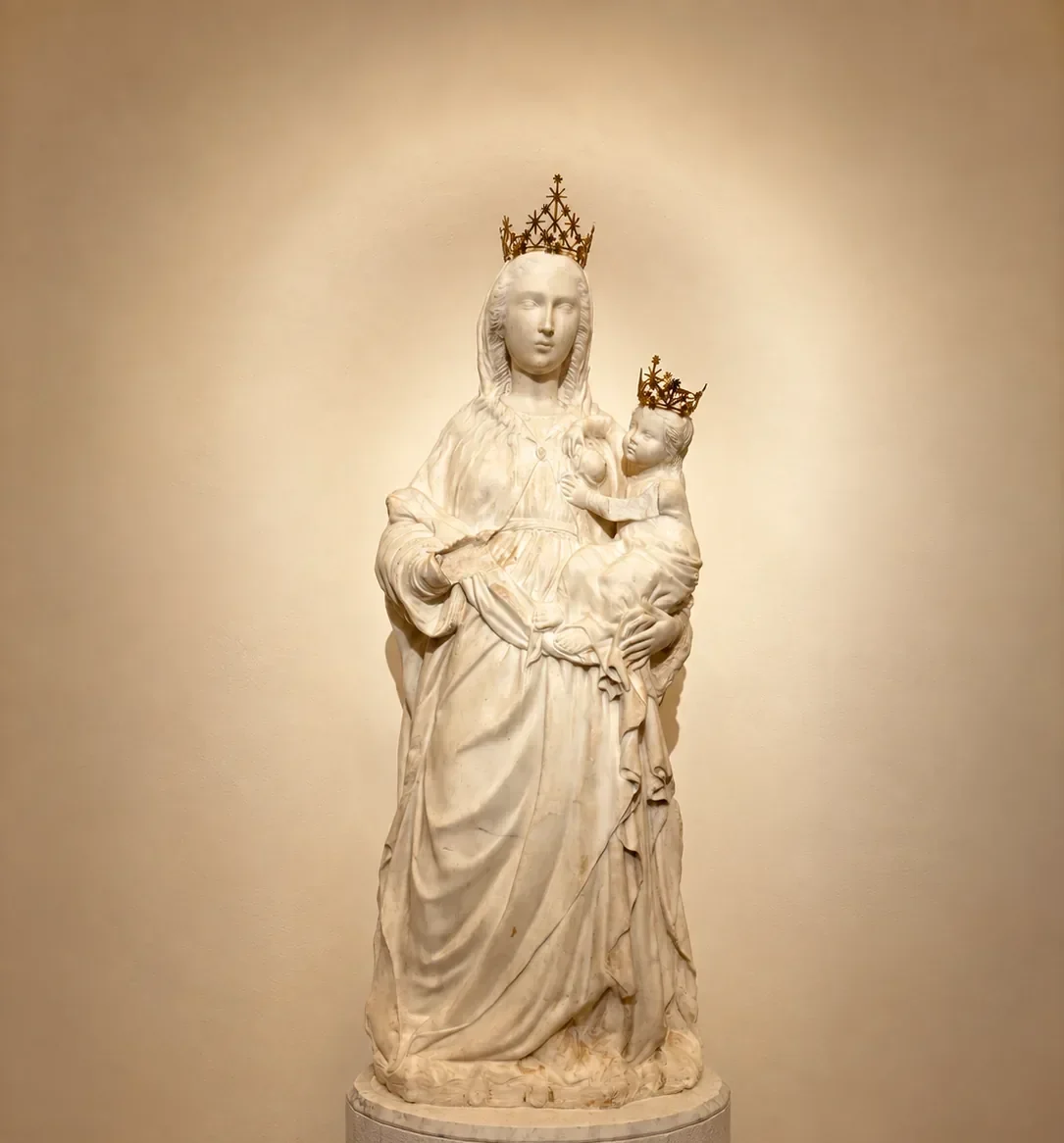
Inside, you can now see a very delicate marble Madonna del Latte — Mary breastfeeding the infant Jesus. I haven’t been able to find its history from the 15th century onward. Seeing it there now feels to me like a small, tender miracle, both contrasting with the weight of the place and, at the same time, emphasising it — and our humanity.